
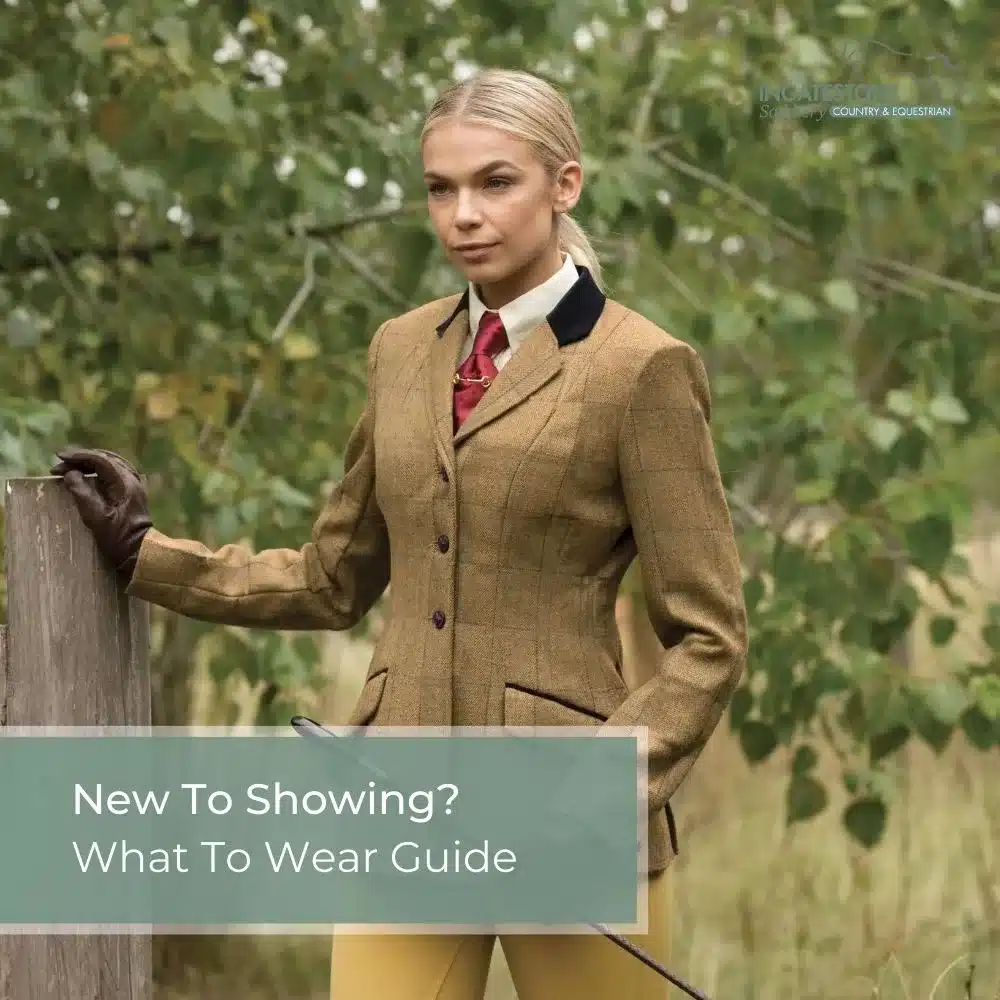
Showing horses can be quite the fashion parade and with so many options of show jackets, breech colours and tack it can be a bit of a minefield working out what you need to wear.
This guide is aimed at anyone who is just starting out, once you move to affiliated showing you will have guidelines from the relevant associations plus will have watched enough and learnt enough to make the choice on what you need to wear.
TOP TIP – Go to show and watch the classes you are aiming for. Take note of what they are wearing and ask questions. Then give it a go and have fun!
Unaffiliated showing offers those just starting out an introduction in to the world of showing. These classes take place at riding club shows and are a great place to start. You will see the competitor there with all the pro gear getting ready to move up however so many will be your grass roots competitors out to have fun and find out more information.
Affiliated Showing often requires a membership to the relevant riding association and will see higher entry fees with the chance to qualify for championship shows.
What type of horse are you showing? A native breed, a riding horse, a cob, a miniature shetland? The type of horse plays a huge role in what colour jacket and tack you require.
For ridden classes a correctly fitted bridle and saddle. Can be brown or black (brown prefered for showing when you move up the levels).
A novice class requires a snaffle bit with a cavesson noseband. No flash/drop/grackle nosebands. An open class (e.g a horse who has won 3 classes at that level – rules vary at shows so check the schedule) can wear a pelham or double bridle with a curb chain and lip strap. Please do not feel rushed to change to this bit at the start just for the class. Only when your horse is comfortable with some experience.
Browband – for a native, cob, hunter, working horse class use a Plain Browband. For a show pony or a riding horse use a velvet covered browband.
Saddle – A show/working hunter saddle with a straighter cut is preferred however to get started use your current saddle and then once established you can look at upgrading. The numnah needs to be cut to fit the shape of the saddle and be of the same colour, with a girth the same colour. Stirrup leathers with standard metal stirrup Irons or Safety Irons for Children such as peacock or simplex irons.
Foals – a headcollar or foal slip
Welsh – White web halter or in-hand bridle.
Yearling – 3yrs – In-Hand bridle with a nylon bradoon bit, newmarket coupling with leather lead rein
4yrs and over – In-Hand Bridle, newmarket coupling with leather lead rein,
Stallions – Please see respective breed society rules as to what to wear, often required to wear a stallion disc and can have chain lead reins. Many shows have rules on which classes stallions can enter as well as restrictions on age of handler so pease check with your competition venue.
A working type horse – this includes cobs, native breeds, hunters, working hunter and riding horses require a tweed show jacket. For riding ponies and ridden show hacks wear a navy riding jacket.
Light coloured breeches/jodhpurs in canary yellow. Generally a toned down yellow or beige preferred for the working horse types.
For In-Hand classes you can wear a skirt or trousers with your show jacket or a show waiscoat. A riding hat is advised but some choose a hat without a harness. In-Hand trousers can be a colour of your choice. Recommended to chose a colour opposite to the colour of your horses legs to separate yours and your horses legs when running around. For example – Stone with black legs or navy with a white grey.
Tall riding boots in black leather with no embellishments for horse classes. Children can wear jodhpur boots with jodhpur clips, usually dark brown.
Dark Brown Gloves with brown show cane or brown working hunter whip
For showing you need a tie collar show shirt with a tie. NOT a riding stock or stock shirt.
Shirts can be cream, canary or white – a school shirt is fine if you are just starting out. Choose a spot or striped / patterned tie that co-ordinates with the jacket colour and velvet coloured browband if you are wearing one.
A navy velvet riding hat is the most popular choice with a flesh coloured Harness. For starting out a skull cap with a velvet hat cover or plain navy hat cover is fine to use.
Hair must be neatly tied back, in a bun or plaited and use a hairnet for the ultimate tidiness.
Horses need to be clean with hoof oil, a tangle free tail. Cobs can be hogged, native ponies leave there mane long and flowing. Hunters, riding horses, show ponies need to have a plaited mane with a plaited or pulled tail.
The most important part when you are just starting out is to go out and have fun, take note of what others are wearing and if you enjoy it you can then start purchasing specific clothing for the show ring. If you have any questions them pop in-store or email us info@ingatestonesaddlery.co.uk and we are more than happy to advise and help you out!
Credit: Written by Jacqui Burgess
About Jacqui : Having been riding and competing since the age of 3yrs, as well as working in equestrian retail for over 20 years, Jacqui’s knowledge of horses has built over the years with her success in showing her home produced ponies and horses. Also a keen dressage enthusiast who has trained up to advanced medium.